1
Industry-Focused Approach
Training is structured around practical workplace risks and day-to-day industrial safety expectations.


PNIFS Safety Induction Training helps employees, contractors and site personnel understand workplace hazards, company safety rules, emergency procedures and individual responsibilities before starting work.
Explore TrainingA strong safety induction creates a common understanding of how work should be performed safely. PNIFS delivers practical induction sessions for companies, project sites, factories, warehouses and industrial facilities, helping participants recognize hazards, follow site rules, use PPE correctly and respond appropriately during emergencies.
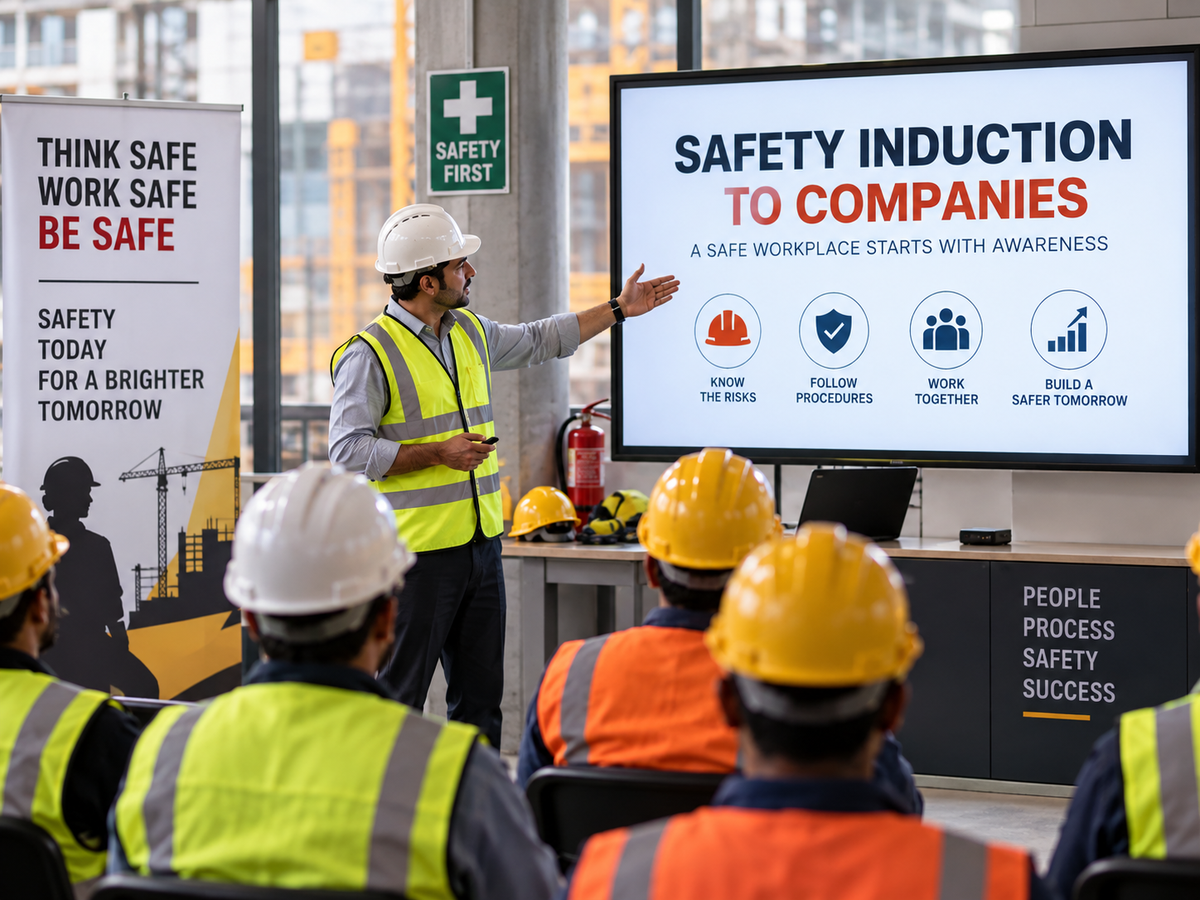
PNIFS combines structured safety concepts with workplace-focused examples to help participants understand hazards, controls and their role in safer operations.
Training is structured around practical workplace risks and day-to-day industrial safety expectations.
Complex safety procedures are explained in simple, easy-to-understand language for mixed workforces.
Participants learn to identify unsafe acts, unsafe conditions and common workplace hazards.
Sessions can be aligned with workplace rules, site procedures and operational requirements.
Workers gain awareness of alarms, evacuation routes, assembly points and emergency reporting.
The program encourages individual responsibility, reporting and safer work behaviour from the first day.
The program is designed to improve hazard awareness, decision-making and understanding of safe work procedures.
This program is relevant for personnel whose roles expose them to the hazards and work activities covered in the training.
Sessions combine explanation, visual learning, workplace examples and knowledge reinforcement.
Structured classroom or onsite explanation of workplace safety essentials.
Use of examples, signs, PPE and workplace scenarios to improve understanding.
Interactive discussion of typical hazards and unsafe behaviours seen at work.
Short questions or review activities to reinforce key safety messages.
Partner with PNIFS for practical corporate safety induction training that helps employees understand hazards, follow site rules and work with greater safety awareness.
View FAQsPlain FAQ content is provided below so you can place it inside your preferred accordion widget or custom accordion structure.
Safety induction training introduces employees and contractors to workplace hazards, safety rules, emergency procedures, PPE requirements, reporting systems and their responsibilities before they begin work at a company or project site.
New employees, contract workers, technicians, construction personnel, maintenance teams, supervisors and anyone entering a workplace where site-specific safety procedures must be understood should attend induction training.
Yes. PNIFS can structure safety induction sessions for corporate, industrial and project environments. Site-specific requirements, workplace rules and operational risks can be incorporated into the session when relevant details are provided.
Typical topics include hazard awareness, site rules, PPE, emergency response, evacuation, incident reporting, housekeeping, safe material handling and basic permit-to-work awareness.
Contractors may be unfamiliar with a company’s hazards, access restrictions, alarms and work procedures. Induction helps them understand these controls before performing tasks onsite.
No. Safety induction provides general and site-specific awareness. Workers should also receive task-specific, equipment-specific or legally required training relevant to the work they perform.