1
Hazard-Focused Training
Participants learn about atmospheric, mechanical, electrical and engulfment hazards.
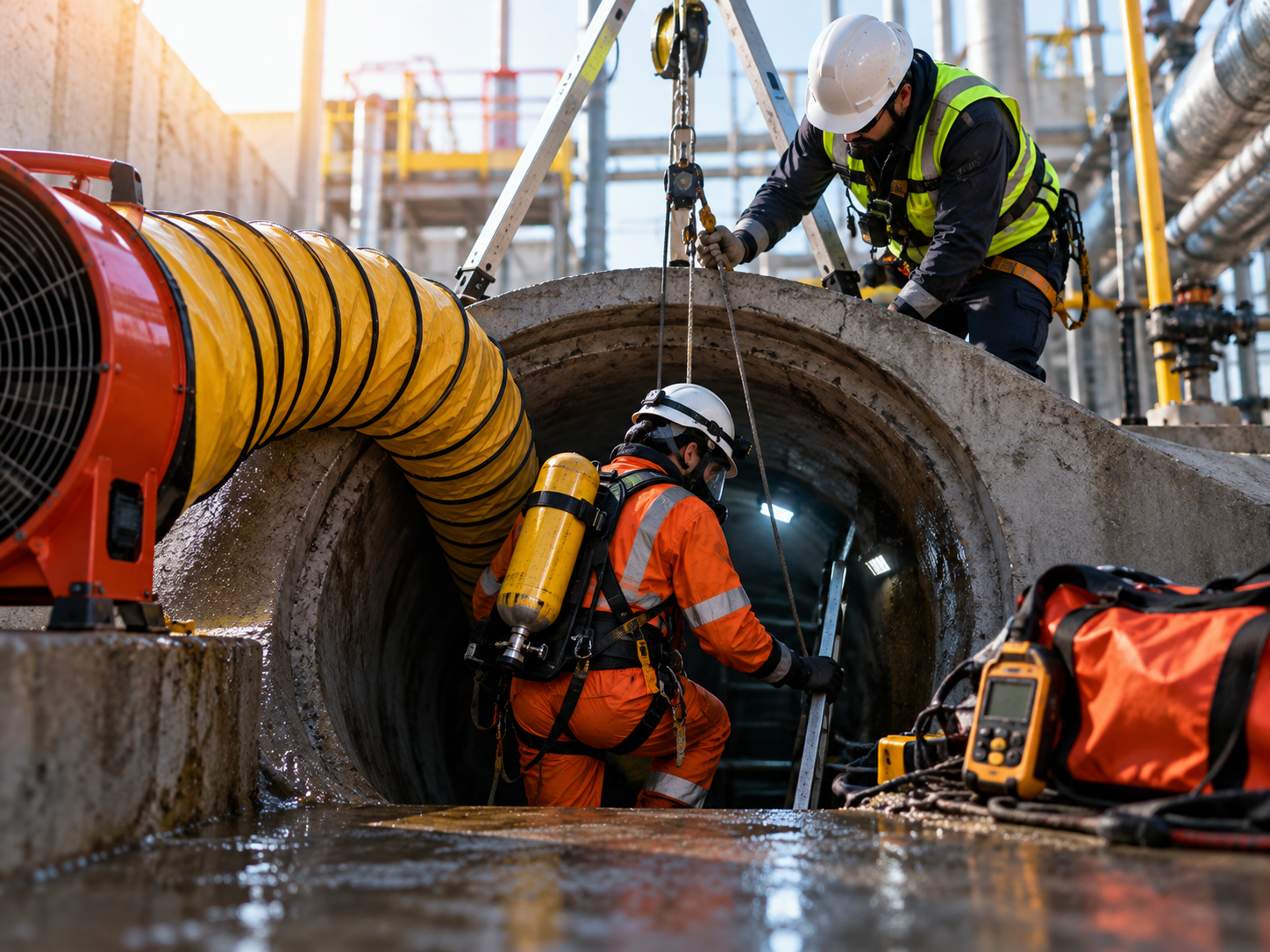
PNIFS Confined Space Training prepares workers and supervisors to recognize atmospheric, physical and operational hazards before entry into tanks, pits, vessels, ducts and other enclosed spaces.
Explore TrainingConfined spaces can contain hazardous atmospheres, oxygen deficiency, toxic gases, engulfment risks, restricted movement and difficult rescue conditions. PNIFS training emphasizes pre-entry planning, permit controls, atmospheric testing awareness, communication, ventilation and emergency preparedness so personnel understand why uncontrolled entry can be dangerous.
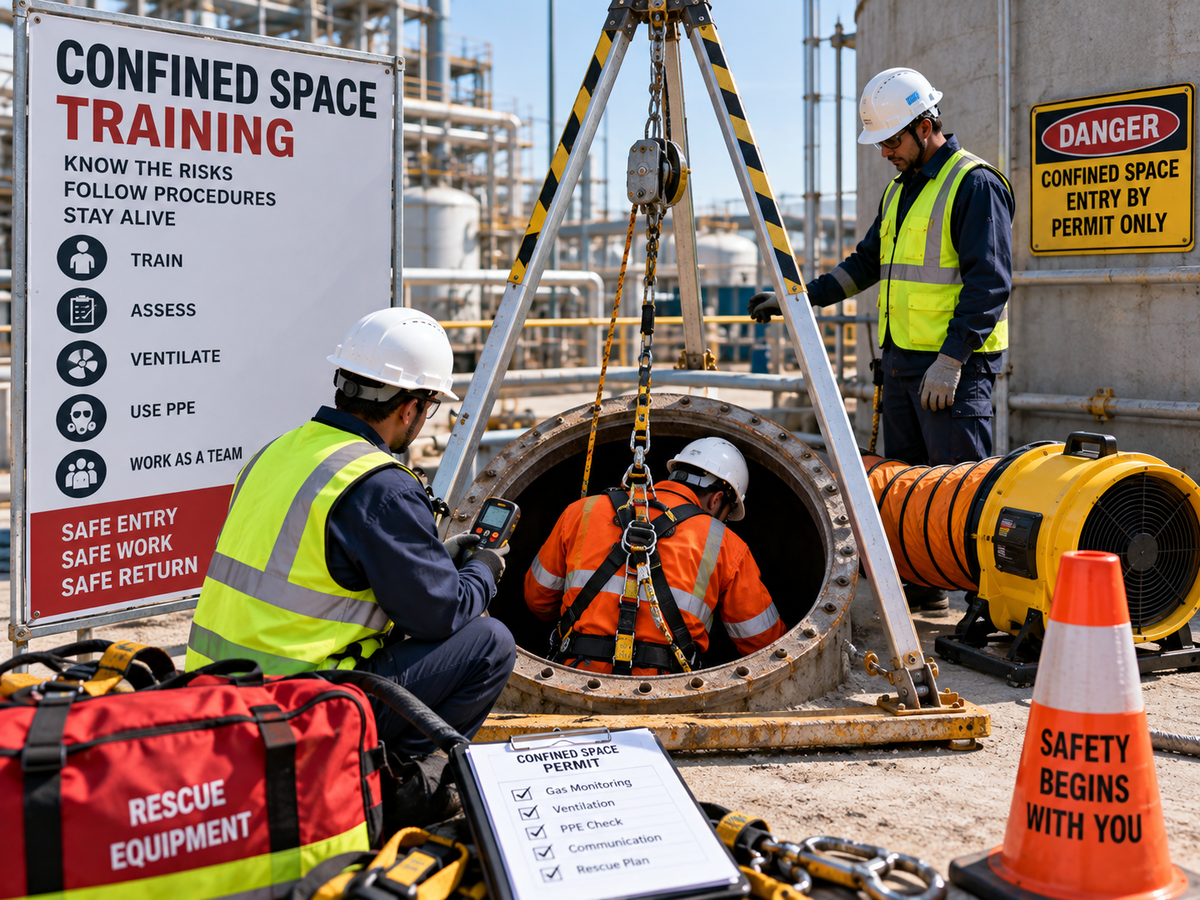
PNIFS combines structured safety concepts with workplace-focused examples to help participants understand hazards, controls and their role in safer operations.
Participants learn about atmospheric, mechanical, electrical and engulfment hazards.
The program explains the role of entry permits and documented pre-entry checks.
Entrants, attendants and supervisors understand their responsibilities during an entry.
Training covers oxygen, flammable and toxic atmosphere awareness and testing concepts.
Participants learn the importance of rescue planning before entry begins.
Content is suitable for tanks, pits, vessels, process areas and maintenance environments.
The program is designed to improve hazard awareness, decision-making and understanding of safe work procedures.
This program is relevant for personnel whose roles expose them to the hazards and work activities covered in the training.
Sessions combine explanation, visual learning, workplace examples and knowledge reinforcement.
Confined-space definitions, hazards and controls are clearly explained.
Participants review the logic behind entry permits and pre-entry checks.
Atmospheric, isolation and ventilation scenarios are discussed using practical examples.
Rescue planning and communication responsibilities are reinforced through scenarios.
Train your team to recognize confined-space hazards, follow controlled entry procedures and understand the importance of atmospheric monitoring and rescue planning.
View FAQsPlain FAQ content is provided below so you can place it inside your preferred accordion widget or custom accordion structure.
A confined space is an enclosed or partially enclosed area with restricted entry or exit that may contain hazardous atmospheres or other serious risks, such as tanks, pits, vessels, silos, sewers or ducts.
Workers entering confined spaces, attendants, supervisors, maintenance personnel, contractors and safety teams involved in planning or controlling confined-space work should receive appropriate training.
Atmospheric testing generally considers oxygen levels, flammable gases or vapours and toxic contaminants relevant to the space and work activity.
Many higher-risk confined-space entries are controlled through a permit system. The exact requirement depends on the workplace, hazards and applicable procedures or regulations.
Ventilation can help control hazardous atmospheres and improve air quality, but it must be selected and managed based on the specific hazards present.
Yes. The training explains why rescue arrangements, communication and emergency planning must be considered before entry, rather than after an incident occurs.