1
Permit-to-Work Focus
Training explains how hot-work authorization supports controlled operations.
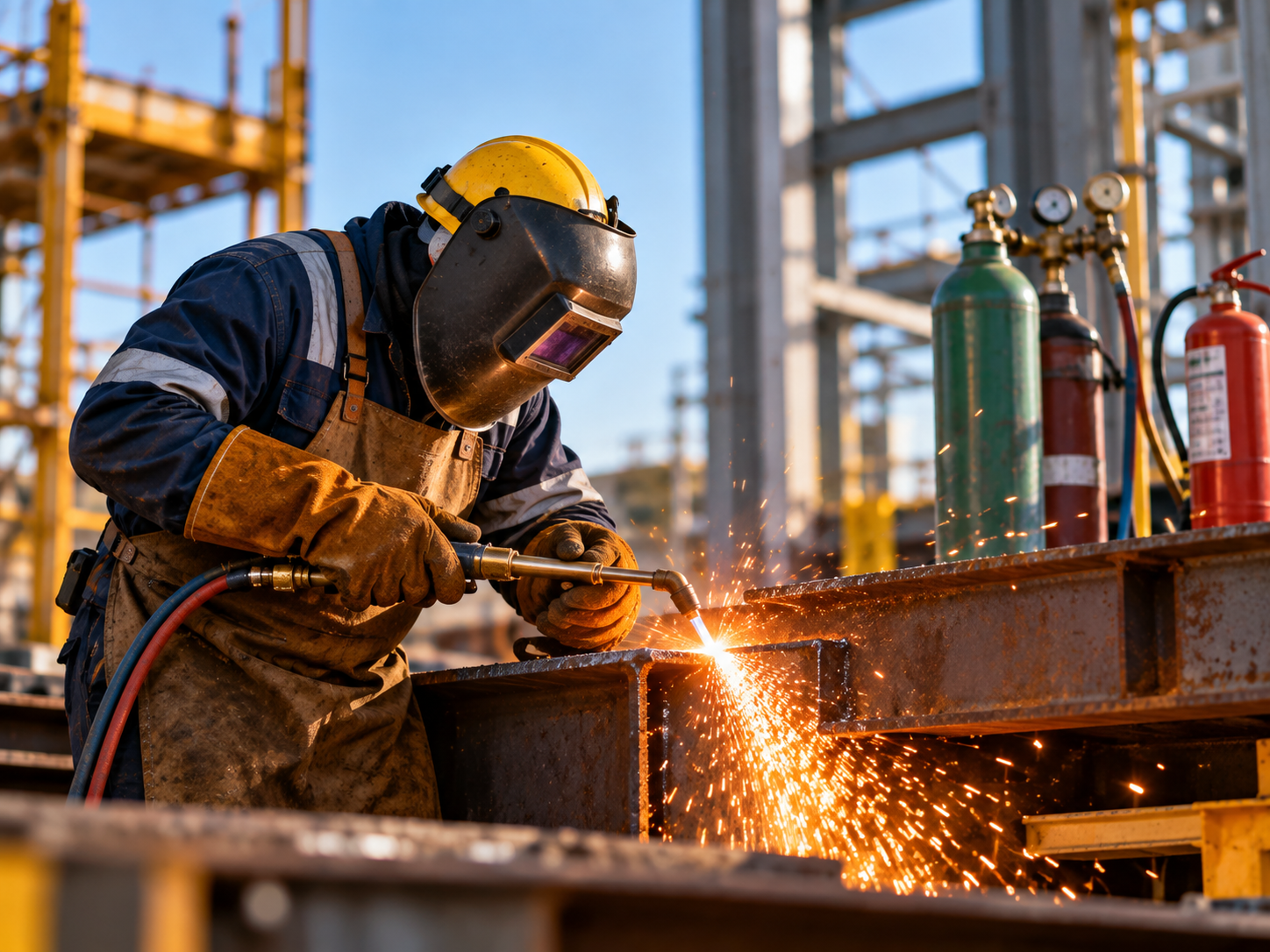
PNIFS Hot Work Safety Training helps workers understand the precautions required for welding, cutting, brazing, grinding and other spark- or heat-producing activities.
Explore TrainingHot work can ignite combustible materials, release sparks, create fumes and introduce serious fire or explosion risks. PNIFS training focuses on permit controls, area inspection, fire prevention, gas-cylinder safety, ventilation, PPE, fire-watch responsibilities and post-work monitoring to support safer hot-work operations.
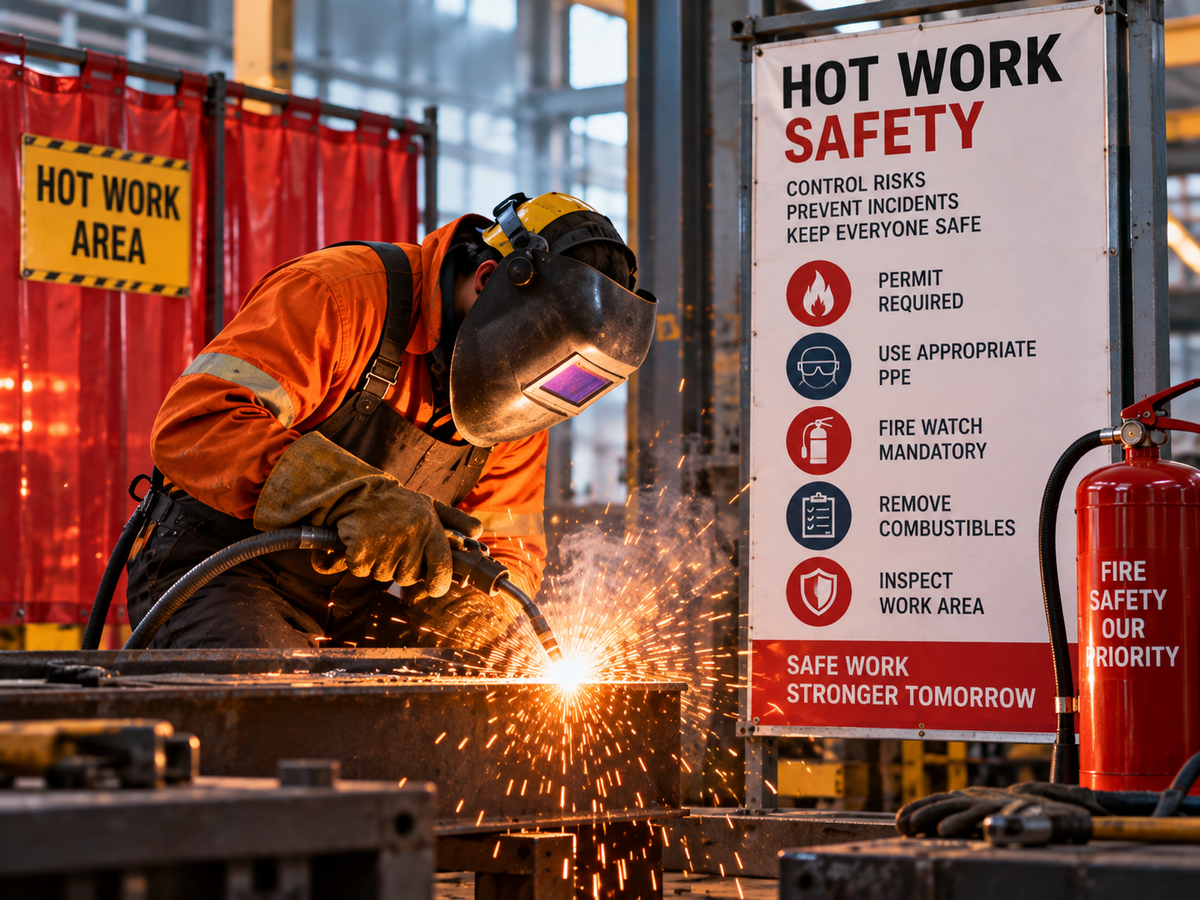
PNIFS combines structured safety concepts with workplace-focused examples to help participants understand hazards, controls and their role in safer operations.
Training explains how hot-work authorization supports controlled operations.
Participants learn to identify ignition sources and combustible materials around the work area.
Basic safe practices for welding equipment, hoses, cylinders and electrical connections are covered.
The role and responsibilities of a fire watch are clearly explained.
Participants learn about protective equipment and ventilation considerations for hot work.
Common welding, cutting and grinding scenarios are used throughout the session.
The program is designed to improve hazard awareness, decision-making and understanding of safe work procedures.
This program is relevant for personnel whose roles expose them to the hazards and work activities covered in the training.
Sessions combine explanation, visual learning, workplace examples and knowledge reinforcement.
Fire, explosion, burn and fume hazards are explained with practical examples.
Participants learn the purpose and sequence of hot-work authorization checks.
Safe handling concepts for cylinders, welding leads and related equipment are reviewed.
Fire-watch actions, extinguisher readiness and emergency response are reinforced.
Help your welding, maintenance and fabrication teams control ignition hazards, follow permit procedures and respond effectively to fire risks.
View FAQsPlain FAQ content is provided below so you can place it inside your preferred accordion widget or custom accordion structure.
Hot work commonly includes welding, gas cutting, brazing, soldering, grinding and other operations that generate flames, sparks or enough heat to ignite nearby materials.
A Hot Work Permit confirms that hazards have been assessed and necessary precautions, such as clearing combustibles, providing extinguishers and assigning a fire watch, have been considered before work begins.
Welders, cutters, fabricators, maintenance workers, fire watchers, supervisors, permit issuers, contractors and safety personnel involved in hot-work activities should attend.
A fire watch observes the work area for ignition, maintains readiness to raise an alarm or use suitable firefighting equipment where authorized, and monitors the area for fire hazards.
Yes. The course includes basic awareness of gas-cylinder storage, handling, hose and regulator condition, separation from hazards and safe operating practices.
Yes. Sparks or heat can cause smouldering materials to ignite after work stops, so the area should be checked and monitored according to site procedures and risk conditions.