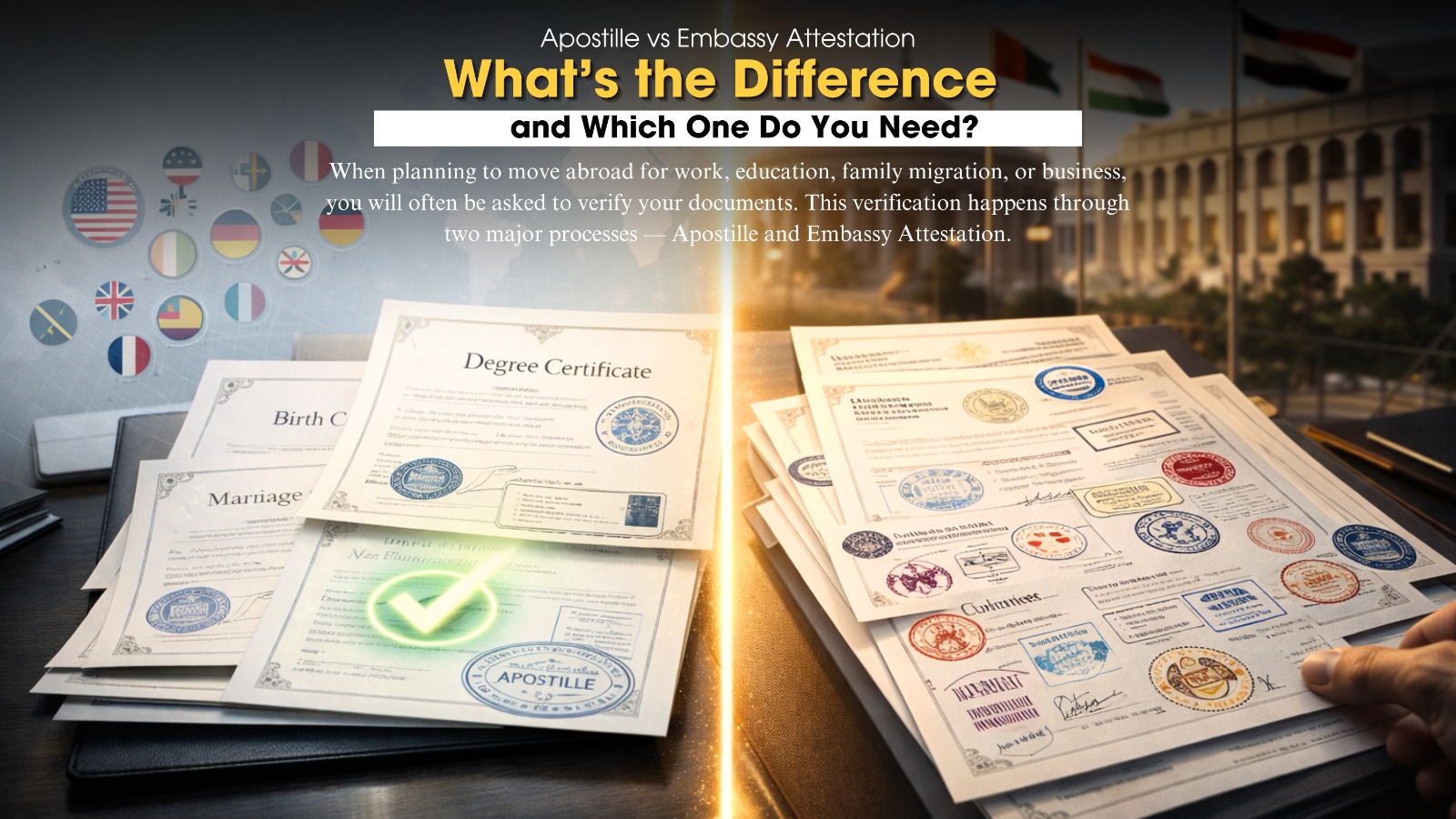
When planning to move abroad for work, education, family migration, or business, you will often be asked to verify your documents. This verification happens through two major processes — Apostille and Embassy Attestation. Although both serve the same purpose of validating documents, they are used in completely different situations.
Many people get confused between the two, but understanding the difference helps you choose the right method and avoid delays in your visa or application process.
What Is an Apostille?
An Apostille is a type of authentication issued by a government authority to certify documents for international use. It is recognized by Hague Convention countries, which include more than 100 nations such as:
USA
UK
Australia
Germany
France
Japan
Netherlands
Italy
Portugal
Once a document gets an Apostille, it does not require any further attestation from embassies or consulates.
Common Documents That Require Apostille
Educational certificates
Birth and marriage certificates
Business documents
PCC (Police Clearance Certificate)
Medical certificates
Why Apostille Is Needed
Apostille proves that the document is authentic and valid for use in any Hague-member country.
What Is Embassy Attestation?
Embassy Attestation is a more detailed verification process required for countries that are not part of the Hague Convention. These include:
UAE
Qatar
Oman
Kuwait
Saudi Arabia
Bahrain
China
Vietnam
This process typically involves multiple steps of verification at both the home country and the destination country’s embassy.
Common Documents That Require Embassy Attestation
Degree and diploma certificates
Birth and marriage certificates
Commercial and business documents
PCC and medical certificates
Why Embassy Attestation Is Needed
Non-Hague countries require additional verification to ensure the authenticity of documents before issuing visas or accepting applications.
Key Differences Between Apostille and Embassy Attestation
- Countries Covered
Apostille: Valid for Hague Convention countries only.
Embassy Attestation: Required for all non-Hague countries.
- Verification Levels
Apostille: Involves fewer steps and quicker processing.
Embassy Attestation: Multi-level verification — state, MEA, embassy, and sometimes MOFA.
- Acceptance
Apostille: One universal certificate is accepted across all Hague-member nations.
Embassy Attestation: Each country requires its own unique embassy verification.
- Legal Standing
Apostille: Acts as full proof of authenticity for international use.
Embassy Attestation: Acts as country-specific verification required for migration, work, study, or business.
Which One Do You Need?
Choosing the right method depends entirely on your destination country.
Opt for Apostille If You Are Going To
USA
UK
Australia
Germany
France
Italy
Netherlands
Spain
South Korea
Denmark
These countries accept Apostille as the final and complete form of authentication.
Choose Embassy Attestation If You Are Applying To
UAE
Qatar
Kuwait
Oman
Saudi Arabia
Bahrain
Malaysia
China
These countries require embassy attestation before granting visas, employment approval, or university admissions.
Why Choosing the Right Method Matters
Using the wrong verification method can lead to:
Visa rejections
University admission delays
Employment contract cancellations
Legal issues in foreign countries
Additional processing time and expenses
Correct attestation ensures a smooth and hassle-free transition.
Final Thoughts
Whether you’re aiming for higher education, a career abroad, migrating with family, or expanding your business internationally, understanding Apostille vs Embassy Attestation is essential. Apostille works for Hague Convention countries, offering a simple and streamlined process. Embassy Attestation, on the other hand, is needed for nations that require extra layers of verification.
By choosing the right method based on your destination, you save time, avoid complications, and ensure your documents are legally valid wherever you go.